
Polysiloxane Topcoat
Description
Two-component high weather-resistant acrylic polysiloxane resin topcoat; Excellent weather resistance and gloss/color retention; Excellent adhesion to epoxy primers; Excellent oil and chemical resistance
Recommended Uses
- For steel structures in severe industrial corrosion environments, including offshore steel structures, wind turbine towers, bridges, etc.; Used as topcoat
Best For
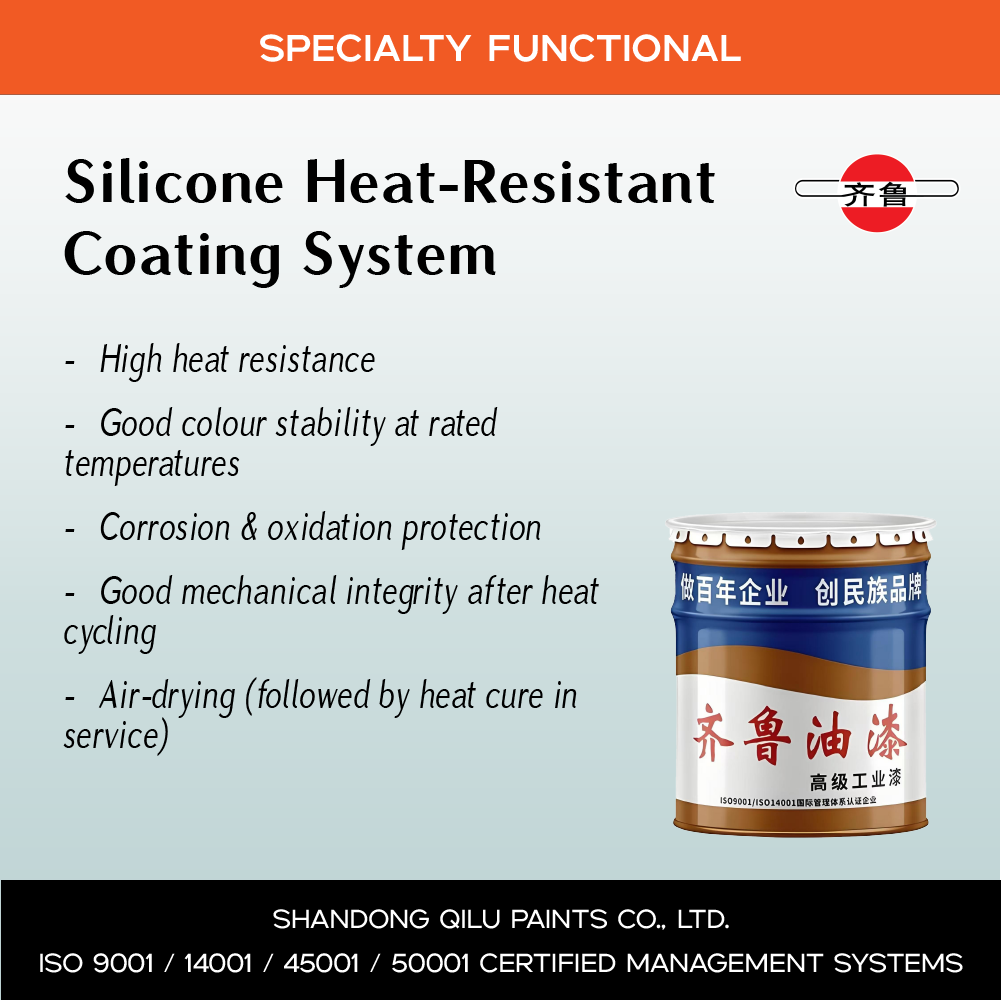
- high-temperature equipment
- chimneys and exhaust systems
- heat-exposed steel
Buyer Benefits
- heat-resistant protection
- designed for temperature exposure
- useful for industrial maintenance projects
Key Features
- heat-resistant protection
- designed for temperature exposure
- useful for industrial maintenance projects
Typical Coating System
Typical silicone system: heat-resistant primer or direct-to-metal silicone coating selected according to temperature and substrate preparation.
Technical Specifications
| Product Family | Silicone |
| Coating Layer | Top |
| Component System | 2K system, confirm mixing ratio from current TDS |
| Recommended Use Snapshot | For steel structures in severe industrial corrosion environments, including offshore steel structures, wind turbine towers, bridges, etc.;... |
| Typical System | Typical silicone system: heat-resistant primer or direct-to-metal silicone coating selected according to temperature and substrate preparation. |
| Surface Dry | 30 min |
| Hard Dry | 24 hrs |
| Dry Film Thickness | 68 μm |
| Theoretical Spreading Rate | 9.61 ㎡/kg (at 50μm DFT, white) |
Confirm current TDS/SDS, packaging, shelf life, and destination-market requirements before quotation or shipment.
Request Current TDS/SDSApplication Guide
| Surface Preparation | For primed or intermediate-coated substrates; Keep surface clean, dry, oil-free |
Compatible Products
Product FAQ
Can I request the current TDS and SDS for Polysiloxane Topcoat?
Yes. Contact the Qilu Paints export team with the product name, destination country, and application environment to confirm current TDS/SDS, packaging, and export requirements.
How should Polysiloxane Topcoat be selected for a coating system?
Confirm substrate, exposure environment, required durability, compatible primer or topcoat, and destination-market documentation before quotation or shipment.
What should be checked before applying Polysiloxane Topcoat?
Check surface cleanliness, surface profile, ambient temperature, substrate temperature, dew point, and relative humidity before application. Stir thoroughly before use.
How should Polysiloxane Topcoat be stored and handled?
Store sealed containers in a cool, dry, ventilated area away from heat, sparks, and direct sunlight. Follow the current SDS for PPE, ventilation, fire prevention, and waste disposal.
What should be checked before applying Polysiloxane Topcoat?
Confirm substrate cleanliness, surface profile, dew point, ambient temperature, humidity, and compatibility with the primer or topcoat in the coating system.
How should Polysiloxane Topcoat be mixed and applied?
Stir thoroughly before use. For multi-component products, mix base and curing agent according to the current TDS, observe induction time and pot life, and only thin with the recommended thinner.
How should unopened Polysiloxane Topcoat be stored?
Store in sealed original containers in a cool, dry, ventilated place away from heat, sparks, and direct sunlight. Confirm shelf life and packaging with the current TDS/SDS before shipment.
What safety precautions are required during application?
Use suitable PPE, provide ventilation, keep away from ignition sources, and follow the current SDS for handling, fire protection, first aid, and waste disposal.
Product Data Source
This product page is generated from Qilu Paints legacy technical product records. Confirm SDS, TDS, export classification, packaging, and destination-market requirements with the sales and technical team before quotation or shipment.
Interested in This Product?
Contact us for detailed technical data sheets, pricing, and customized solutions for your application.