
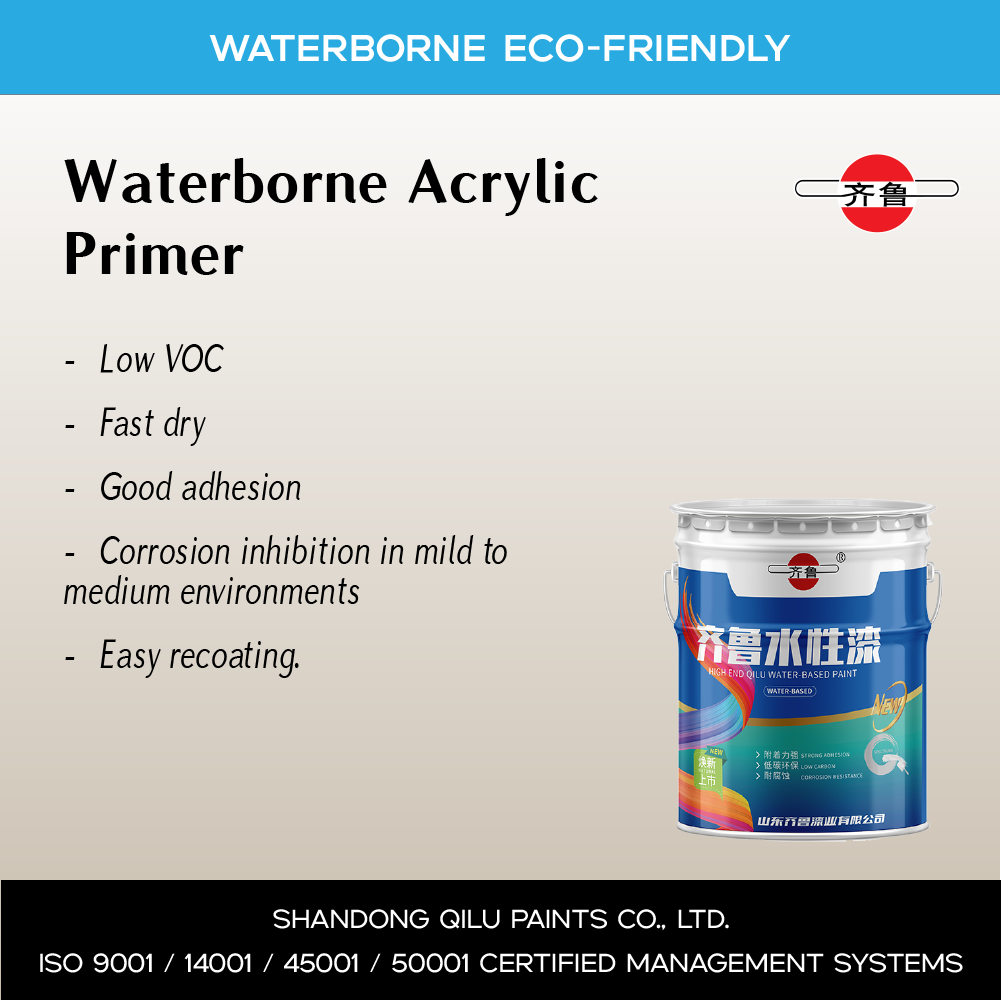
Waterborne Acrylic Sealer Primer
Description
Waterborne Acrylic Sealer Primer is formulated from ultrafine water-based cementitious materials and imported additives. It is an alkali-resistant sealing primer with excellent performance.
Best For
- projects with low-VOC requirements
- waterborne steel protection
- environmental compliance requests
Buyer Benefits
- reduced solvent odor
- waterborne handling profile
- useful where VOC reduction is part of the specification
Key Features
- Strong adhesion, excellent water and alkali resistance.
- Strong penetration, effectively reinforcing the base layer.
- Alkali resistance and sealing. When used with a topcoat, it can extend the topcoat's service life and enhance its fullness and gloss.
Typical Coating System
Typical waterborne system: waterborne primer and compatible waterborne topcoat selected according to substrate and exposure environment.
Technical Specifications
| Product Family | Waterborne |
| Coating Layer | Primer |
| Component System | 1K or ready-to-use system, confirm from current TDS |
| Recommended Use Snapshot | projects with low-VOC requirements, waterborne steel protection |
| Typical System | Typical waterborne system: waterborne primer and compatible waterborne topcoat selected according to substrate and exposure environment. |
Confirm current TDS/SDS, packaging, shelf life, and destination-market requirements before quotation or shipment.
Request Current TDS/SDSApplication Guide
| Application Method | The paint must be thoroughly mixed before use. One coat of application is sufficient. When applying, ensure the paint is spread evenly, without bubbles or missed spots. The topcoat or medium-thickness paint should be applied only after the paint film has dried for 4 to 6 hours. Theoretical coverage: 8-10㎡/KG. Actual coverage may vary depending on the application method, water dilution, temperature, and surface material. The surface must be clean, dry, firm, and free from loose particles and crystalline residues. For old walls, the old paint film should be removed using a high-pressure water gun or putty knife as appropriate. To prevent mold growth and excessive alkalinity, apply a coat of sealing primer. If the pH of a new wall is above 10, it is recommended to use oxalic acid for cleaning and neutralizing to reduce the pH to below 10. |
Compatible Products
Product FAQ
Can I request the current TDS and SDS for Waterborne Acrylic Sealer Primer?
Yes. Contact the Qilu Paints export team with the product name, destination country, and application environment to confirm current TDS/SDS, packaging, and export requirements.
How should Waterborne Acrylic Sealer Primer be selected for a coating system?
Confirm substrate, exposure environment, required durability, compatible primer or topcoat, and destination-market documentation before quotation or shipment.
What should be checked before applying Waterborne Acrylic Sealer Primer?
Check surface cleanliness, surface profile, ambient temperature, substrate temperature, dew point, and relative humidity before application. Stir thoroughly before use.
How should Waterborne Acrylic Sealer Primer be stored and handled?
Store sealed containers in a cool, dry, ventilated area away from heat, sparks, and direct sunlight. Follow the current SDS for PPE, ventilation, fire prevention, and waste disposal.
What should be checked before applying Waterborne Acrylic Sealer Primer?
Confirm substrate cleanliness, surface profile, dew point, ambient temperature, humidity, and compatibility with the primer or topcoat in the coating system.
How should Waterborne Acrylic Sealer Primer be mixed and applied?
Stir thoroughly before use. For multi-component products, mix base and curing agent according to the current TDS, observe induction time and pot life, and only thin with the recommended thinner.
How should unopened Waterborne Acrylic Sealer Primer be stored?
Store in sealed original containers in a cool, dry, ventilated place away from heat, sparks, and direct sunlight. Confirm shelf life and packaging with the current TDS/SDS before shipment.
What safety precautions are required during application?
Use suitable PPE, provide ventilation, keep away from ignition sources, and follow the current SDS for handling, fire protection, first aid, and waste disposal.
Product Data Source
This product page is generated from Qilu Paints legacy technical product records. Confirm SDS, TDS, export classification, packaging, and destination-market requirements with the sales and technical team before quotation or shipment.
Interested in This Product?
Contact us for detailed technical data sheets, pricing, and customized solutions for your application.